08/06/2026
Characterisation of materials supplied to the upscaled LiCORNE processes
The selection of the samples that are feeding the upscaled LiCORNE follows a pattern similar to the establishment of the technology routes. When launched, the project initially researched 14 technologies at laboratory scale. No less than 36 samples were provided for the laboratory activities, among which: crushed spodumene ore, non-calcinated and calcinated spodumene concentrate, lithic mica concentrate and lithium phosphate rich ore, as well as geothermal and continental lithium brines, synthetic Li brine-like solution and off-specification cathode material.
The materials that will feed the upscaled processing routes are:
- Non-calcinated spodumene concentrate provided by ECM, from their Wolfsberg Lithium Project, located in Carinthia Austria – region which also hosted the LiCORNE M36 review meeting.
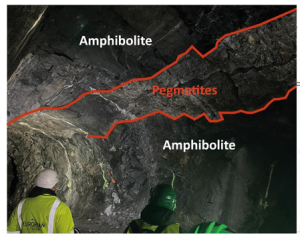
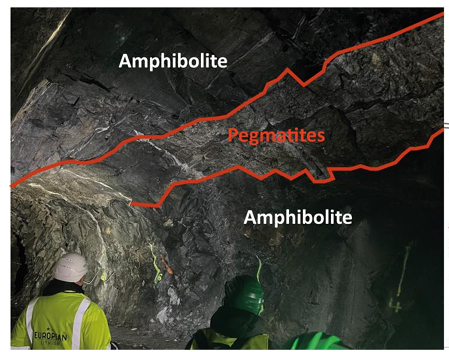
Field observation of a pegmatite dyke containing spodumene. The image shows a pegmatite intrusion cutting from the Wolfsberg mine, ©visual Électricité de Strasbourg
In January 2026, ECM shipped around 30 kg of spodumene concentrate at the premises of NTUA, in charge of the calcination pre-treatment phase of the upscaled route. In Athens, the non-calcinated sample was further analysed, confirming its composition with high Li2O content.
- Continental lithium brine provided by SQM, from Salar de Atacama deposit in northern Chile – recognised worldwide as one of the highest reported lithium and potassium concentrations in continental brines.
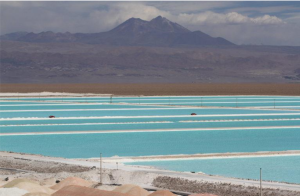
View of the Salar de Atacama (Chile), showing SQM’s network of solar evaporation ponds used for concentrating lithium‑rich brines, ©photo SQM
Continental brines are highly concentrated saline water deposits found in closed basins, such as salt lakes or salt flats. These brines contain a high concentration of dissolved salts, including lithium. For the upscaled process validation, SQM supplied a continental brine sample from a well characterised by high sulfate (HS) content. Such sulfate-rich brines typically present significant challenges for conventional solar evaporation and concentration pond processes because excess sulfate can induce the precipitation of lithium sulfate during concentration, reducing lithium recovery efficiency.
With the authorisation of the Chilean authorities, SQM shipped a container carrying 500 L of brine to TECNALIA for the scale-up of the lithium recovery process using a liquid/liquid extraction, followed by carbonation.
- Off-specification cathode material provided by UMICORE from their UMI Rechargeable Battery Materials site in Korea. The composition analysis, conducted two times – prior and post shipment – shows the powder is predominantly composed of Ni, followed by Mn, Co and Li.
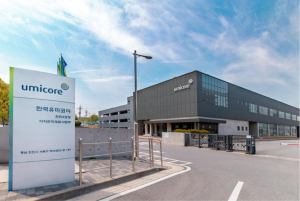
UMICORE Rechargeable Battery Materials plant in Cheonan, Korea