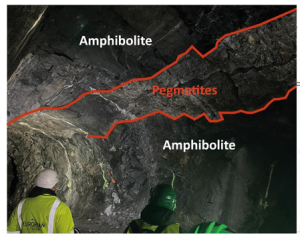
Field observation of a pegmatite dyke containing spodumene. The image shows a pegmatite intrusion cutting from the Wolfsberg mine, ©visual Électricité de Strasbourg
The selection of the samples that are feeding the upscaled LiCORNE follows a pattern similar to the establishment of the technology routes. When launched, the project initially researched 14 technologies at laboratory scale. No less than 36 samples were provided for the laboratory activities, among which: crushed spodumene ore, non-calcinated and calcinated spodumene concentrate, lithic mica concentrate and lithium phosphate rich ore, as well as geothermal and continental lithium brines, synthetic Li brine-like solution and off-specification cathode material.
The materials that will feed the upscaled processing routes are:
Field observation of a pegmatite dyke containing spodumene. The image shows a pegmatite intrusion cutting from the Wolfsberg mine, ©visual Électricité de Strasbourg
In January 2026, ECM shipped around 30 kg of spodumene concentrate at the premises of NTUA, in charge of the calcination pre-treatment phase of the upscaled route. In Athens, the non-calcinated sample was further analysed, confirming its composition with high Li2O content.
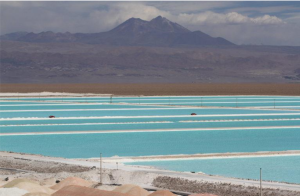
View of the Salar de Atacama (Chile), showing SQM’s network of solar evaporation ponds used for concentrating lithium‑rich brines, ©photo SQM
Continental brines are highly concentrated saline water deposits found in closed basins, such as salt lakes or salt flats. These brines contain a high concentration of dissolved salts, including lithium. For the upscaled process validation, SQM supplied a continental brine sample from a well characterised by high sulfate (HS) content. Such sulfate-rich brines typically present significant challenges for conventional solar evaporation and concentration pond processes because excess sulfate can induce the precipitation of lithium sulfate during concentration, reducing lithium recovery efficiency.
With the authorisation of the Chilean authorities, SQM shipped a container carrying 500 L of brine to TECNALIA for the scale-up of the lithium recovery process using a liquid/liquid extraction, followed by carbonation.
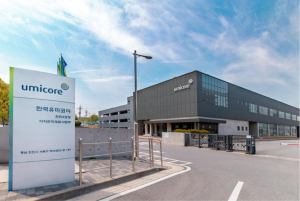
UMICORE Rechargeable Battery Materials plant in Cheonan, Korea
Producing battery-grade lithium compounds is one of the final steps in the LiCORNE value chain. Partners across Europe have been refining electrochemical and crystallisation processes to recover lithium as high-purity carbonate or hydroxide from diverse sources: brines, ores and recycled cathode materials.
Using the solutions derived from VITO’s upstream processes, SINTEF researchers have constructed and commissioned electrochemical cells for electrodialysis to convert lithium chloride (LiCl) and sulfate (Li2SO4) solutions into lithium hydroxide (LiOH). Tests achieved:
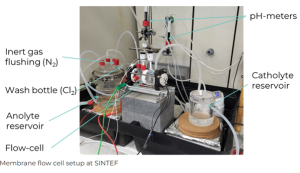
Membrane flow cell setup © SINTEF
TECNALIA, advancing the organic-based membrane electrolysis, scaled up to a 10 cm2 electrolysis cell to test three types of solutions –those produced by the liquid-liquid extraction processes from brines and from spodumene leachates, and the off-specification cathode leachates. Outcomes include:
| Off-specification cathode material | A four-chamber setup recovered lithium and oxalic acid with yields above 95%, while the carbonation process produced Li2CO3 of >99% purity. |
| Brines and spodumene | Li recovery is performed directly on the stripping dissolution obtained in the separation and purification steps, bypassing membrane-electrolysis. Carbonation delivered 88% purity for brines and 99% for spodumene. |
| PIMs [Polymer inclusion membranes] | Tests confirmed lithium migration is possible, but further research is needed to improve conductivity and ensure efficient transport. |
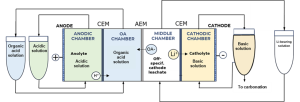
4-chamber flow cell diagram designed by TEC for lab experiments, © TECNALIA
The research group at Fraunhofer Institute for Chemical Technology ICT explored a simple, highly scalable method for Li2CO3 recovery using a combination of several methods like ion exchange (IE), reversed osmosis (RO), electrodialysis with bipolar membranes (EDBM), and Li2CO3-precipitation (see figure below). The goal was to recover high-purity lithium carbonate from Lithium-concentrated solutions provided by partners EnBW and KIT.
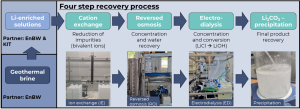
Setup for Li2CO3 recovery from Li-concentrated solutions starting with ion exchange, via reversed osmosis and electrodialysis | © Fraunhofer ICT
While ion exchange removed key impurities, the removal of Mn2+ ions (particular in EnBW samples) is still under investigation. Low contamination levels are crucial for electrodialysis and lifetime of EDBM. For KIT-sourced solutions, the process delivered Li₂CO₃ at 99.89% purity.
SINTEF researchers achieved selective chlorination of lithium from calcined spodumene concentrate and off-specification cathode waste, with yields exceeding 95%. Their selective chlorination converts insoluble oxides to soluble chlorides by electrolysis, thus extracting target elements: Li, Ni and Co. Experiments show:
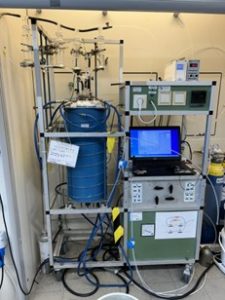
Chlorination setup at SINTEF, © SINTEF
The Gas-Diffusion Electrocrystallisation (GDEx), VITO’s proprietary technology, achieved >95% lithium extraction from geothermal and continental brines, spodumene effluents and cathode leachates. Downstream synthesis produced Li₂CO₃ with:
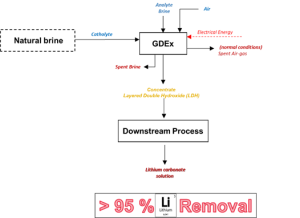
Schematic representation of the Gas-diffusion electrocrystallisation (GDEx) process, © VITO
[© Featured visual: Amadeus Bramsiepe]
With the corresponding work package already concluded, results on extraction of lithium and other critical metals from concentrates, ores, tailings and off-specification cathode materials are now available. The main goal of this work package has been to develop processes that are energy-efficient, environmentally safer, and equally suitable for industrial scale-up.
Alkaline leaching promises a more economical alternative for processing spodumene concentrate and related minerals, by reducing operating temperatures and eliminating the need for aggressive chemicals. Researchers at NTUA developed and optimised the alkaline leaching of lithium from spodumene concentrate supplied by ECM and lithic mica from the mines operated by Imerys. The challenge they received was to achieve Li extraction rates exceeding 92% while maintaining low impurities levels in the Li-bearing aqueous solutions.
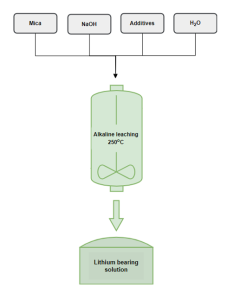
The innovative alkaline leaching process developed by NTUA, © NTUA
A series of experiments were conducted on the α-spodumene concentrate and lithic mica, analysing key parameters such as the leaching solution concentration, the nature of additives, retention time and their effect on lithium leaching. Lithium extraction up to 100% was successfully achieved from lithic mica and 75% by spodumene concentrate.
TEC’s advanced solvometallurgy approach uses deep eutectic solvents [DES] to extract lithium from spodumene concentrate, lithic mica and lithium phosphate, as well as lithium, cobalt and nickel from off-specification cathode material. This low-temperature process combines selectivity with solvent reusability, reducing environmental impact. Key outcomes show that Li, Co, Ni recovery exceeded 95% at room temperature. Moreover, organic solvents were reused up to ten times without loss of efficiency.
Pre-treatment steps (ball milling and calcination) improved leaching performance, enhancing the recovery yields:
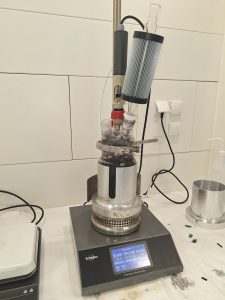
Reactor used for the solvometallurgical leaching experiments © TEC
KIT researchers studied in depth various ball-milling parameters for the mechanochemical transformation of the off-specification cathode material samples provided by Umicore. After milling, water leaching separated lithium compounds from an insoluble metallic composite rich in nickel, manganese, and cobalt. Using aluminium as a reducing agent during ball milling, followed by aqueous leaching, the process achieved:
By lowering temperatures, eliminating acid roasting, and enabling solvent reuse, these processes significantly reduce energy demand and chemical consumption.
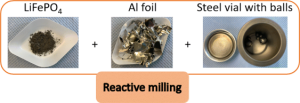
Reactive ball-milling of off-specification cathode material in presence of a reducing agent © KIT
The Horizon Europe project LiCORNE has completed an important milestone in its journey to establish a sustainable lithium supply chain in Europe. At the end of 30 months of research and technical development, the project consortium has selected three process flowsheets for upscaling. These routes represent the most promising routes for lithium recovery from European resources: ores, brines and off-specification battery cathode materials (waste).
Why this matters? Europe, from its position as an ambassador of the green transition, is expected to see a major increase in demand for lithium. Yet, its contribution to the lithium supply chain remains modest, despite holding an estimated 5 % of the global reserves. Most of this lithium is locked in hard-rock deposits, which are generally costly and environmentally challenging to extract. Domestic mining projects often face public resistance, while refining capacity remains limited.
Moreover, JRC’s studies indicate that despite a projected increase in EU’s battery cell production, the bloc remains import-reliant for battery-grade materials. Refined lithium inputs are expected to come increasingly from new EU mines, provided critical bottlenecks, such as domestic conversion and refining are removed. The Commission’s JRC additionally estimated that by 2040 recycled cobalt and nickel could meet up to 51 % and 42 % of EU demand, respectively.
LiCORNE, short for Lithium recovery and battery-grade materials production from European resources, is one of the numerous R&I initiatives launched to address this strategic vulnerability. The project aims to build Europe’s first integrated lithium supply chain. Its mission spans beyond simply optimising technological processes to recover lithium and battery-grade materials, aiming to provide solutions that are both efficient, scalable and sustainable.
After three years of research and technology optimisation, the LiCORNE consortium has selected the flowsheets that will be further upscaled during the project’s last 12 months. This selection followed a two-step assessment:
The final ranking identified the following three flowsheets as candidates for upscaling:
1. Spodumene route:
2. Continental brine route:
3. Off-specification cathode:
A feasibility study was performed for the three candidate flowsheets before moving into scale-up phase. The study confirmed their readiness for implementation in line with equipment requirements, scalability and the project’s remaining budget envelope.
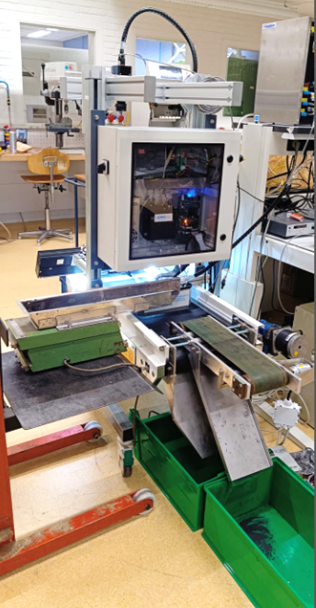
During conventional mineral processing, significant resources are often lost during the beneficiation phase. Lithium-bearing particles trapped in the gangue can proceed to downstream stages, reducing the efficiency of the entire extraction process. To address this, researchers at TU Delft have developed an Opto-Magnetic Sorting System that significantly enhances the separation of lithium ores. This innovative technology combines precision liquid deposition and magnetic separation techniques, offering an advanced alternative to traditional gravity-based separation methods used in beneficiation circuits.
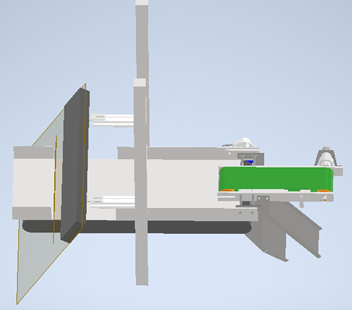
The process starts with lithium-bearing ores being crushed and sieved, isolating particles in the 2–4 mm size range for the next step – optical sorting. A high-resolution line scan camera captures continuous images of particles on a conveyor belt. These images are processed in real-time using a custom algorithm developed at TU Delft, which is trained to identify lithium-rich particles based on subtle colour differences.
Once identified, the target particles are selectively marked using magnetic powder. This enables the marked lithium-rich particles to be separated efficiently by a downstream magnetic conveyor into a dedicated container.
This innovative beneficiation approach has successfully prevented around 45% of the gangue material from entering the downstream process—nearly three times more efficient than the initially targeted improvement of 15%.
According to the State-of-the-Art [SoA], processing spodumene takes place at high-temperatures [1100oC], with direct implications on the economic viability of the entire process. Researchers at TEC have been investigating an alternative to conventional processes. Their investigation features ball milling and calcination at lower temperatures than the conventional process, using additives when needed for the improvement of the next leaching step.
Ball milling is a mechanical process that induces self-sustaining reactions in many sufficiently exothermic powder mixtures. These exothermic reactions, which release a significant amount of heat, can influence both the microscopic and macroscopic properties of the resulting material. On a microscopic level, the heat generated by the reactions can cause changes in the crystal structure and composition of the material. On a macroscopic level, these changes can affect the material’s overall properties, such as its strength, hardness and reactivity. TECNALIA’s findings show that the combination of the ball milling with additives lower calcination temperatures required [200oC below the SoA] in the pre-treatment process of the samples and, also, allow milder conditions in the next processing phases (leaching).
The process, replicated on lithic mica and lithium phosphate materials, was also successful to achieve good results in the next leaching step.
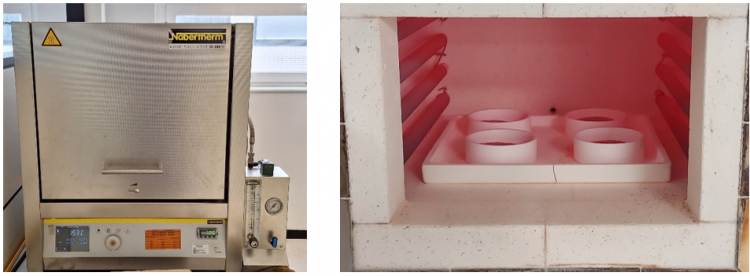
The furnace used in the calcination pre-treatment by TECNALIA
A large group of people arriving on 15 May to Milos island was gathering at Adamantas Conference Centre for the LiCORNE Dissemination Event. A homogenous group of participants, both local authorities and stakeholders from all conrners of Europe, some privileged and attending in person, others online, opened up the floor for discussions around innovative approaches for sustainable extraction of critical raw materials (CRMs) and the role of geothermal fields.
Organised by AdMIRIS on the Milos island, known for its rich geothermal and mineral resources, the event addressed mining sustainability and lithium market dynamics at international, European and national level.
Europe, from its position as an ambassador of the green transition, is expected to see a robust increase in demand for lithium. Although not as well endowed when it comes to lithium as Australia, China and Chile, it is still home to an estimated 5 % of the global reserves. Its insignificant contribution to the global supply highlights the need for strategic reserves and investments in mining and recycling to ensure a stable supply and resilience against market volatility. Presentations at LiCORNE’s Dissemination Event hinted at timely investments in strategic reserves of lithium while prices remain low. This would, ideally, run in parallel with investing in new mines in Europe, incentives for recycling initiatives and continuous development of a performant infrastructure to support the adoption of electric vehicles.
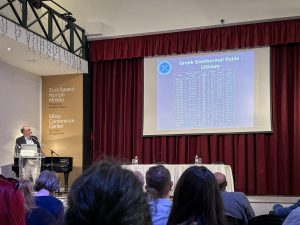
After a brief introduction into the strategic importance of lithium as a critical raw material for green technologies, Dr. Christos Kanellopoulos from the Hellenic Survey of Geology and Mineral Exploration (HSGME), mapped various Li deposits on the map of Greece, along with national exploration projects currently assessing the metal’s presence in various ore deposits – pegmatites, lignite deposits, high salinity closed lakes, geothermal fluids and tertiary basins.
Getting lithium out of European ground is not easy. The metal can be found mostly in hard-rock deposits, which require open pit mines that are usually large, polluting, water-intensive and noisy. Mining projects in Europe are often met with hostile attitudes by the “not-in-my-backyard” and environmental groups. The Greek perception on the mining context in Europe, presented by Mr. Konstantinos Yazitzoglou, Chairman of the Greek Mining Enterprises Association, was both awakening and engaging.
The first take-away set the context, which reminded clearly that all human activities, including mining, create an impact on the environment. Our challenge today is to balance this impact with the benefits it brings. Historically, Western countries have subcontracted mining activities to other parts of the world, often disregarding the environmental and social impacts. Today, this practice is no longer sustainable as those regions are no longer willing to bear the negative consequences.
The BRICS group controls a significant portion of the world’s critical raw materials. With this challenging scenario, Europe has initiated strategic projects and legislative measures to address this issue, but progress has been relatively slow.
The mining industry carries a few ‘negative images’ – including incidents, professional provocateurs and spontaneous reactions from local communities, that should be addressed if Europe aims to resuscitate its mining activities.
To foster a healthy relationship with local communities, finding common grounds on how to disagree and addressing concerns with full transparency remain essential. Emphasising the social dimensions of mining, Mr. Konstantinos Yazitzoglou presented a Greek initiative to create a network of mining township to promote the coexistence of mining and local communities.
During the second part, the LiCORNE Dissemination event spiced up with contradictory presentations. PPC Renewables, operating numerous wind farms, hydroelectric and photovoltaic plants and a hybrid power plant, has recently leased several geothermal concessions in different regions in Greece, including one in Milos-Kimolos-Polyaigos island group. Geophysical surveys and drilling have revealed significant geothermal potential in Milos. Key findings include high conductivity areas in the eastern part of the island, a clear division of the island into two geological sections, and the presence of geothermal fluids in the eastern part of the island.
Despite the richness of the geological formations and the company’s initiatives to engage with the local community, during the event, local authorities made an announcement that no geothermal explorations will take place on the Milos island.
However, the island already has exemplary use cases of mining activities nurtured through social responsibility and engagement with local communities. Imerys is a world leader in mineral-based specialties, providing high-added solutions to various industries, including construction and consumer goods. The company, also a partner in the LiCORNE project, succeeds through performant operations, commercial excellence, market-driven innovation and a strong business model.
In 2018, Imerys launched their SustainAgility programme, structured into three key areas:
Imerys use case reflecting their activities on the Milos island is a sustained effort across several years. Three to four years of corporate involvement in identifying stakeholders, analysing their influence and interests, managing relationships, planning and reporting outcomes through consultation, communication, negotiation, compromise and building relationships that stand the test of time. Imerys presence in Milos, especially during the Covid pandemic, ensured the island’s resilience in times when tourism regular activities were restricted. Imerys long-term operation in Milos relies on balanced development, co-existing with tourism businesses. The company has invested in various initiatives to secure social acceptance and support from the local community.
Various partners in the LiCORNE project presented their innovative research and innovation [R&I] approaches aimed at supporting the sustainable exploration and exploitation of lithium resources. These partners showcased cutting-edge technologies and methodologies designed to minimise environmental impact while maximising resource efficiency, ensuring that lithium extraction aligns with sustainability goals and contributes to the green energy transition.
The LiCORNE project coordinator, Dr. Lourdes Yurramendi opened the technical sessions with an introduction into the scope of work and the objectives, leading after the conversation to the presentations of the specific technologies explored by the LiCORNE partners:
At the LiCORNE EU Project Dissemination event, Nader Akil [Business Operations Manager at PNO] outlined how the EU’s funding is strategically distributed to support R&I initiatives like LiCORNE. The EU’s evolving policy mix, including the Critical Raw Materials Act [CRMA], proposed in March 2023, focuses on ensuring a diverse and secure supply of materials for new industries, setting priorities and benchmarks for 2030. The NetZero Industry Act [NZIA] aims to scale up clean technology manufacturing in the EU to 40 %, with fast-track permitting and strategic projects. The Innovation Fund, closely tied to the NZIA, supports net-zero technologies, including €1 billion for electric vehicle battery cell manufacturing and funding for lithium extraction combined with geothermal installations. The Competitiveness Compass aims to retain Europe’s competitive edge by closing the innovation gap and decarbonising high-impact sectors. With over €22.5 billion in strategic project investments and ambitious 2030 benchmarks, structured innovation ecosystems are essential.
On 12 December 2024, the third edition of the annual workshop of the Cluster Hub “Production of Raw Materials for Batteries from European Resources” took place in Brussels, being co-organised by EU-funded projects RHINOCEROS, CRM-geothermal and CICERO. This third edition, along with an increasing number membership, confirm the hub’s role as a dynamic ecosystem that continues to generate innovations in the European battery materials sector.
The hub’s annual workshop, held as a satellite event of the Raw Materials Week 2024, provided once again a platform for presenting the most promising results from participating projects. Two technical sessions covered the entire battery value chain, from raw materials mining to recycling, while the opening conveniently portrayed the policy, the regulatory and strategic frameworks that support and drive the EU R&I initiatives in the battery sector.
Susana Xara, Project adviser on raw materials at European Health and Digital Executive Agency (HaDEA), established the discussions tone, navigating through the insights of the Critical Raw Materials Act [CRMA] and the Net Zero Industry Act [NZIA] and focusing on their contribution to securing a sustainable supply of critical raw materials for the European battery industry.
Wouter IJzermans, BEPA Executive Director, presented the long-term vision and potential revisions of their roadmap, emphasising the importance of policy frameworks and incentives in promoting battery innovation and deployment across Europe.
The presentation of Vasileios Rizos from the Centre for European Policy Studies (CEPS) identified various barriers and challenges emerging from the EU policy framework on batteries, based on inputs from 20 companies across the entire battery value chain, including partners from the BATRAW project, member of the Cluster Hub since 2022. The representative of CEPS concluded with a set of policy messages referring to early dialogue channels established between policy-makers and various stakeholders. Before the legal requirements entry into force, this information exchange on availability of secondary data sets could enable stakeholders to assess the data quality, select suitable sets of information and identify potential data gaps.
Publicly available resources submitted by CEPS:
Orchestrating the launch and on-going work of the Cluster Hub, PNO Innovation Belgium [part of PNO Group – leader in innovation and funding consultancy], represented by Dr. Nader Akil, concluded the first session with an overview of all EU funding programmes supporting research, innovation and investment in raw materials production for batteries. Additional to the upcoming funding opportunities and guidance on selecting the appropriate funding opportunities based on the status of technology, Dr. Nader Akil introduced another initiative launched by PNO Group – DIAMONDS4IF. This project supports the preparation of Innovation Fund applications, enabling the transfer of H2020 research results into successful ventures and securing investment funding.
Download Funding Schemes presentation
The session of technical presentations debuted with RAWMINA project, represented by Carmen Estepa, R&D Manager at AGQ Mining & Bioenergy, providing an overview of its final results on the demonstration activities of an integrated innovative pilot system for CRMs recovery from mine wastes. Up-to-date results indicate encouraging extraction rates of ~90 % Fe, ~95 % Co and ~60 % antimony (Sb) yielded by the bioleaching process. Additionally, the alkaline leaching applied after bioleaching extracted more than 90 % tungsten (W), while the following processing step – Fe precipitation, confirmed that Fe and Sb can be removed almost completely from the solution (>90 %). Finally, the processes engaged in the selective CRM recovery yielded promising recovery rates in the range of 99 % for Co, 65 % for W, 77 % for Sb.
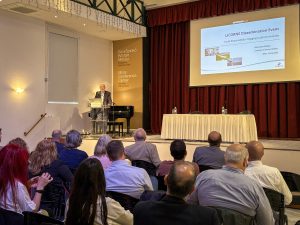
Dr. Albert Genter, Deputy General Manager of ES Géothermie, presented the geochemical characterisation of geothermal reservoir rocks in the Upper Rhine Graben – results of their activities conducted within the LiCORNE EU-funded project. After a short incursion into the geological formation of the Upper Rhine Graben (URG) area, Dr. Albert Genter highlighted the feasibility of lithium (Li) extraction from the geothermal brines. The high Li concentrations in the geothermal brine at Soultz-sous-Forêts and Rittershoffen [in the range of 150-200 mg/L], combined with significant water flows exploited by the geothermal power plants, indicate a great potential for Li production in the URG. After establishing the fluid circulation within the fractures of the geological formation, the research team at ES-G will continue investigating the chemical composition of sedimentary rocks, which are also part of the reservoir Soultz-sous-Forêts, and conducting Li and strontium (Sr) isotope analyses to provide more detailed information about the origin of lithium in the brine.
Dr. Nivea Magalhães [Univ. of Exeter, UK] presented the conclusions of the forensic geometallurgy protocol established within the ENICON project. Often, information not directly related to processing leads to limited insights into ore processing behaviour. ENICON investigates the impact of mineral textures and grain size on liberation, sometimes interfering with automated mineralogy results. Additionally, the project presented the findings of the ore characterisation of the Kevitsa mine, containing nickel (Ni)- and cobalt (Co)-bearing minerals.
The CRM-geothermal presentation, delivered by Saskia Bindschedler, Professor at Univ. de Neuchatel, Faculty of science, Institute of biology, Laboratory of microbiology, focused on the use of microbial activity for Li recovery from geothermal brines. Geothermal brines are characterised by high temperatures, increased pressure and salinity, conditions favourable for bioextraction processes using microbes. Key findings confirmed the feasibility of microbial-driven processes for Li recovery, enabling effective filtering of elements using oxalate compounds, followed by precipitation via oxalothropic bacteria, such as Pandoraea sp.. While the researchers will continue working on oxalotrophy and initial pH optimisation, focusing on improving the scalability, they will additionally investigate Li concentration in fluid samples.
Download CRM-geothermal presentation
An insight into the results of the METALLICO project, with focus on their COOL+ technology, was delivered by Sandra Pavon from Fraunhofer IKTS. COOL+ is one of the five technologies investigated within the framework of METALLICO, that involves a leaching step using supercritical CO2, that enables the extraction of Li in a more efficient and environmentally friendly manner. After explaining the five phases of the process and comparing the results at the main conclusions reported high selectivity and efficiency in Li recovery, achieving Li2CO3 which meets battery-grade specifications with a purity of 99.7 %. The solid silicate residue that remains after the CO2 leaching step is not wasted. Instead, it is repurposed to produce geopolymers which are further used in the construction sector, aligning with the principles of circular economy and zero-waste.
Download METALLICO presentation
Research partners from the LiCORNE consortium are working on developing and optimising various technologies to produce battery-grade materials. SINTEF, for instance, have designed, built and tested their advanced electrodialysis apparatus using purified lithium (Li) solutions derived from the upstream treatment processes of Li-ore. Intermediary results show the process will require further optimisation to obtain 99 % purity LiOH and the targeted energy consumption of less than 15 kWh/kg. The research is still ongoing, focusing now on removing the Al ions prior to the electrodialysis process and on investigating new operating parameters.
In another task, working on the optimisation of the conditions for selective chlorination of spodumene concentrate and cathode waste, SINTEF achieved almost 95 % Li yield using CaCl2 -NaCl -KCl melts. Optimisation is underway to replicate the results to the other valuable materials available in the cathode material.
Researchers at TEC have been optimising the organic-based membrane electrolysis process to recover Li from organic solutions as Li2CO3. Results indicate they managed to achieve over 95 % Li yield from off-specification cathode material, while recovering all the organic solvent used in the previous (leaching) step for its reuse. Good yield rates have also been obtained for the treatment of solutions produced in the liquid/liquid [L/L] extraction of brines and spodumene. However, the selectivity of the membrane is insufficient to overcome the migration of the high concentration of other competing cations such as Na, K, Mg and Ca. Researchers are currently producing and testing new PIMs (Polymer Inclusion Membranes) to try to improve the results.
The research group at VITO have been refining their gas-diffusion electrocrystallisation process for Li recovery from brines, achieving over 95 % removal of Li from most of the samples. By manipulating and adding salts to the brine sample, results show that more than 99 % Li is extracted. The energy efficiency of the GDEx process can be improved with the optimisation of the GDEx reactor.
With all technological processes reporting progress and reaching the targets established at proposal stage, future months will rely on the results of the LCA and LCC analysis, which will establish the most promising processes that will enter the upscaling phase.
© visual:Adobe Stock Photos
Partners working on various extraction processes of lithium (Li) from a variety of feedstocks – concentrates, waste cathode material, ore and tailings, are reaching target recovery rates.
NTUA researchers have developed an alkaline leaching process to extract Li from spodumene concentrates, which yielded extraction rates of over 92 % and low impurities. The same process, this time applied on lithic mica, resulted in Li extraction rates of nearly 100 % at a longer leaching duration. Moreover, the optimal settings showed the capacity to maintain the level of impurities low. Leaching experiments on mica samples will continue, but results are already encouraging. This new leaching process requires temperatures considerably lower than the conventional extraction process, currently at 1100°C.
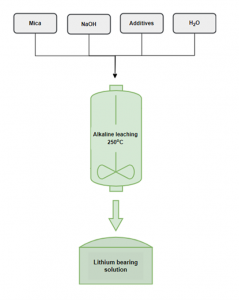
Alkaline leaching scheme to extract lithium NTUA
On their side, researchers at TEC have been optimising the solvometallurgical process to extract valuable elements from four type of materials: spodumene concentrates, lithic mica, lithium phosphate and off specification cathode material. After achieving their target of more than 95 % Li extraction from spodumene, the optimisation phase tested (taking advantage of the result from the novel pre-treatment established and previously described) milder leaching conditions, obtaining similar good results. For lithic mica and lithium phosphates, best operations routes investigated have shown that pre-treatment increases considerably the leaching yield at values higher than the target. For the off-specification cathode material, researchers have concluded that mechanical activation of the cake obtained after leaching improves Li extraction, achieving up to 99 % Li recovery and very high selectivity at room temperature processing. Ni, Co and Mn can be separated as a valuable mixture in the same process.
Finally, the research team at KIT, in charge of the reactive milling and aqueous leaching of waste cathode material [NMC], optimised the purification processes using various reducing agents. The intermediary results yielded Li recovery rates ranging between 68,8 % and 91 %, depending on the reducing agent utilised during the purification process. Next steps for KIT research group expand to calculating the lithium carbonate [Li2CO3] purity, determining the recovery rate of Ni, Mn and Co and upscaling the ball-milling.
VITO researchers, working on the Li-sieve adsorption and desorption from aqueous leachates, shaped the lithium-titanium-oxide (LTO) adsorbents into spheres, which enabled dynamic testing. The optimised flow rates and settings initially modelled on synthetic Li solutions have been recently tested on real samples, yielding approx. 85 % Li recovery from aqueous alkaline spodumene leachates. The team at VITO has recently filed a patent application with the desorption stability results.
Expected results have already been shaping up in Spain, where TEC is working on the Li extraction from both continental and geothermal brines. After running tests using the most suitable extractants for their liquid-liquid extraction process [L-L] coupled with stripping operations, researchers have managed to obtain a global Li extraction of 92 % from continental brine, far beyond the initial target of 85 %, while diminishing the content of the accompanying cations (Na, K, Ca and Mg). On the other hand, the same technological process applied to spodumene yields a global recovery rate around >90 % after optimisation of the scenarios based on McCabe-Thiele diagrams.
In another European region, famous for its geothermal resources, EnBW researchers have been investigating Li-extraction from brines. They developed a novel synthesis route for Lithium Manganese Oxide [LMO] adsorbent, for which a patent has been recently filed. The LMO adsorbents have been demonstrating high absorption capacity and selectivity for Li extraction from brines with high salt contents. Offering improved chemical stability and potential for large-scale production of the material, this solution looks very promising for future implementation at industrial level for Li recovery.
Another extraction process, the electrode-based Li adsorption and desorption from brines, has been optimised by KIT. Following the principles of a salt water battery, the electrochemical extractions with Li-selective electrodes yielded encouraging results for the Li-extraction from geothermal brines. The Li selectivity in the recovery solution were in the range of 77 % to 82 %, displaying a good separation from the main contaminants.
© visual: TECNALIA
During the M24 consortium meeting held in Karlsruhe (GER), the project team presented the latest progress achieved in the work package dedicated to the supply and characterisation of the feedstock, with a primary focus on the geochemical analysis of geothermal brines and rocks.
Between M18 and M24, researchers collected and sent for analyses geothermal brine from the reservoir at Soultz-sous-Forêts in France. This latest analysis not only revealed a Li concentration above 170 mg/L, which confirms the stability and the quality of this resource for a potential future lithium extraction in the Upper Rhine Graben geothermal brine.
In addition to brine analysis, the researchers conducted thorough geochemical analyses on core samples from three deep wells in Soultz-sous-Forêts. These wells intersect the Muschelkalk limestone, Buntsandstein sandstone and Visean granite formations. A total of 57 core samples, sourced from depths ranging between 841 to 5060 m were selected for analysis. The focus was on 36 granite samples, where the lithium concentrations varied significantly. According to the analysis of the research team at ES-G, Li concentrations tend to be highly impacted by hydrothermal alteration. They found that Li concentration can vary by two orders of magnitude when compared to the fresh granite mainly due to secondary minerals precipitation. However, solubilisation of Li is identified in most of the case where hydrothermal alteration is important.
Stakeholders interested in the characterisation performed by ES-G have the chance to find more detailed information at the upcoming Stanford Geothermal Workshop, taking place between 10 and 12 February 2025.
Further isotopic analysis of Li and Sr in rock samples will allow researchers to further understand the sources and mobilisation of Li in geothermal brines. These analyses will provide more accurate insights into the geochemical processes involved and support the development of more efficient and sustainable lithium extraction methods.
© visual:Adobe Stock Photos